
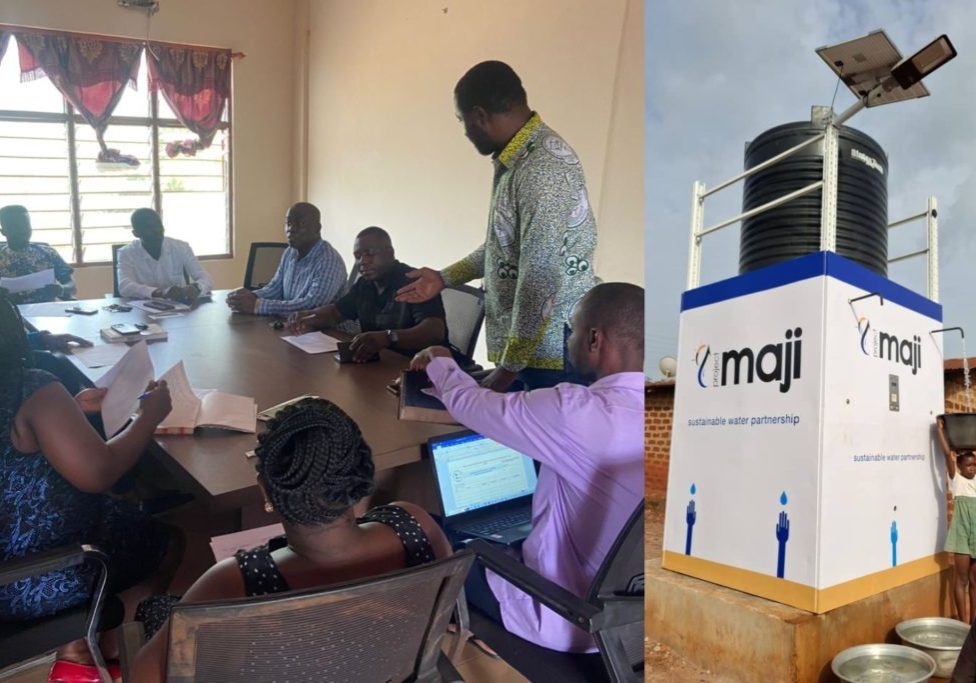
Customer Service as a Catalyst: One Farmer’s Call Changed Everything
In the cocoa-farming community of Camp No. 1 in Asunafo South, Ghana, securing water used to be a daily battle. Established in the 1970s as a temporary outpost for lumberers, Camp No. 1 gradually transformed into a permanent settlement. Yet, despite its growth, access to clean water remained a crisis.
Nearly 2,000 residents depended on three boreholes—none of which functioned properly. One was completely broken. Another had no electricity because the bills hadn’t been paid. The third kept failing, despite repeated repairs that never lasted. The community’s water scarcity meant long lines, mounting frustration, and, most concerning, children arriving late to school after spending hours fetching water.
The Need for More Than Infrastructure
At the heart of this struggle was Mr. Appiah Adams, a 54-year-old farmer and father of eight. From his home, he watched his children and others in the village spend hours in search of water instead of focusing on their education. Water shortages didn’t just mean inconvenience; they fueled tensions, impacted livelihoods, and compromised health.
“Without water, everything suffers. You need it to cook, to farm, to stay healthy. But in our village, water was a daily crisis.”
—Mr. Appiah Adams
For years, community members voiced their concerns, but nothing changed. The problem wasn’t just broken infrastructure—it was the absence of a system to report and resolve issues efficiently. There was no clear mechanism to connect those facing the problem with those capable of fixing it.
A New Approach: WashDesk Bridges the Gap
Change came when the WashDesk team from the Asunafo South District Assembly arrived for a routine outreach visit. WashDesk is a private – public partnership initiative with Netcentric Campaigns a non-governmental organization and the Ahafo government, funded by the Conrad N. Hilton Foundation. This program introduces an innovative approach to improving essential services in Ghana. More than just a complaint registry, it serves as a customer-service hub for water and sanitation issues—ensuring that concerns aren’t just recorded, but swiftly escalated to the right people for real action.
After learning how WashDesk operated, Mr. Appiah and the local chief wasted no time. They filed a formal complaint with the District Assembly through a WashDesk field officer. The case was quickly logged and forwarded to the Client Services Officer in Kukuom, the district capital. Within days, Mr. Appiah received a call: WashDesk had addressed the issue, and a solution was underway.
Turning Complaints into Action
A short time later, during their monthly review, the WashDesk advisory team assessed Camp No. 1’s urgent water crisis. The timing was perfect—WashDesk had been in discussions with Project Maji, an organization specializing in solar-powered water systems. The village’s documented need made it an ideal candidate for support.
“When we got the reports from Camp No. 1, we knew we had to act,” said District Planning Officer Mr. James Ata-Era, who is also a member of the WashDesk team. “Because the community spoke up and because the problem was well-documented, we could move fast.”
Project Maji sent a team to assess the site. Led by their Community Engagement and WASH Consultant, Ms Ama Wilson Sarpong, a series of meetings were held with community elders at Camp No. 1. Project Maji even used drones to map the area. Soon, they had a plan: a solar-powered water system that would provide clean, 24-hour access. Project Maji would oversee operations and maintenance to ensure long-term functionality. In addition, a local entrepreneur would be trained and deployed to manage daily operations for a fee. The community would receive 30% of the earnings from the sale of water.
Along with Netcentric Campaigns, Project Maji is one of the partners working on the Ahafo Integrated WASH Project, which is funded by the Conrad N. Hilton Foundation. Their approach has been to work closely with District authorities and other partners to extend water services to needy communities.
A Lasting Impact
Today, clean water flows freely in Camp No. 1. There is a dedicated vendor from the community in charge of selling tokens that enable residents to purchase water. Project Maji provides around-the-clock support for operations and maintenance. The village is saving money from its share of water revenue for future expansions. Families no longer fight over water. Children arrive at school on time, healthier, and more focused.
“The biggest change is in the children. They’re not late to school anymore because they don’t have to wait in long lines for water. They’re healthier. And they can focus on learning, not survival.”
—Mr. Appiah Adams
For Mr. Appiah and the local chief, the experience transformed them into WashDesk champions. They now encourage neighboring villages to use the service, ensuring that no community suffers in silence.
Scaling Success: The Power of Networks
WashDesk’s success in Camp No. 1 is not an isolated case. Over the last two years, the program has expanded into all six districts across the Ahafo region. Engaging over 45,000 people across a population of 600,000, WashDesk facilitates WASH (Water, Sanitation, and Hygiene) literacy campaigns and collects feedback on local water and sanitation systems. Since its inception, more than 800 complaints have been logged, with a high rate of resolution on average in a month when the WASH advisory Committee meets once a month through collaboration with district governments and local partners.
This is the power of WashDesk. People speak up. Problems get recorded. Teams connect needs with the right partners. And real solutions happen—with a network of collaborators involved every step of the way.
But WashDesk is more than just fixing broken systems—it empowers communities. By establishing a clear, structured process to document, escalate, and resolve water and sanitation challenges, it not only delivers solutions but also builds trust between residents and decision-makers. This model demonstrates how well-designed networks can create lasting, tangible improvements in people’s daily lives.
For the people of Camp Number One, this was about more than just water. It was about being heard, about trust in leadership, and about reclaiming control over their futures. And it all started with one farmer making a call.
About WashDesk
WashDesk is an innovative initiative designed to improve water, sanitation, and hygiene (WASH) services in Ghana by implementing a networked customer service model. Developed with strategic support from Netcentric Campaigns, WashDesk leverages connecting people to each other in network-driven solutions to ensure community members can document, escalate, and resolve WASH challenges effectively.
By helping to shape WashDesk’s model, Netcentric Campaigns has played a key role in connecting the people in the community to client service teams, planning coordinators, health and communications teams, elected and appointed officials, technical support and maintenance teams across communities, leading to tangible improvements in daily lives.
This approach not only addresses infrastructure issues but also strengthens trust between residents and decision-makers.
Using a combination of radio, community information centers, SMS broadcasts, a toll-free number, and WhatsApp messaging, WashDesk consistently delivers WASH-related and customer service messages to more than 40,000 residents of the Ahafo Region of Ghana.
At Netcentric Campaigns, we believe systems change starts with connection. Join us in supporting networked solutions for water, health, and community resilience—and help us grow this work in Ghana and beyond.